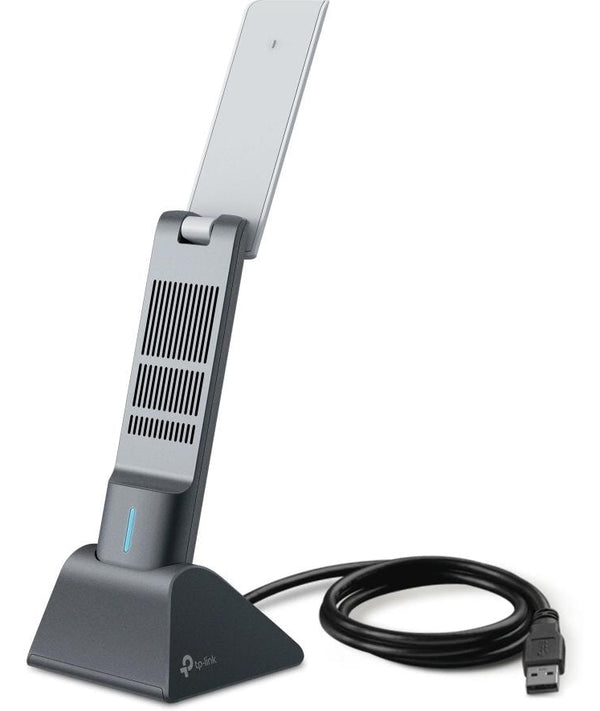
DrayTek Access Point Vigor AP805
- VendorDrayTek

Description
DrayTek Access Point Vigor AP805
AX3000 WiFi 6 Mesh Dual Band Access Point
802.11ac (Wi-Fi 5) Wi-Fi Standard
The 802.11ac Wi-Fi standard offers up to twice the data throughput of older standards. This increase is achieved in part by widening the transmission bandwidth. In addition, 802.11ac can increase the number of parallel data streams (Multiple Input Multiple Output, or MIMO) to up to eight MIMO streams, while the 802.11n standard supports a maximum of four MIMO streams. Even large data files such as videos and backups pose no problem with this Wi-Fi speed.
802.11ax (Wi-Fi 6) Wi-Fi Standard
The 802.11ax standard is the next generation of the Wi-Fi standard, which has been continuously developed for years and introduces yet another innovation with this version, also known as Wi-Fi 6. The standard builds on the advantages of the 802.11ac standard and expands them with efficiency, flexibility, and scalability. This enables higher speeds and capacities for next-generation applications, in both new and existing networks.
Multi-SSID Support
Thanks to Multi-SSID, you can use this access point to operate multiple wireless network zones with different names and access rights. One option would be to set up separate network segments for individual departments or, for example, to operate smart home and IoT devices in separate zones. This ensures that visitors' smartphones have no network access to PCs containing confidential data. If you expand your wireless network with additional access points, make sure that the new APs support at least as many SSIDs per radio module as your router/Wi-Fi controller.
Specifications
- RJ-45 Anschlüsse:
- 2
- Anwendungsbereich Accesspoint:
- Home, Small/Medium Business
- Montage Access Point:
- Desktop
- Aussenanwendung:
- Nein
- Verpackungseinheit:
- 1 Stück
- Tiefe:
- 110 mm
- Breite:
- 110 mm
- Höhe:
- 153 mm
- Mesh:
- Ja
- Access Point Features:
- Cloud Management, Gast-WLAN, Lizenzfrei, Mesh, Multiple SSID, Network Monitoring, RADIUS, Repeater, Schnelles Roaming, Verwaltbar, VLAN, Wave 2, WDS, WPS
- Antennenanschluss:
- Antennen Intern vor verbaut
- WLAN Standard:
- IEEE 802.11ac Wave 2, IEEE 802.11ac (Wi-Fi 5), IEEE 802.11a (Wi-Fi 1), IEEE 802.11ax (Wi-Fi 6), IEEE 802.11b (Wi-Fi 2), IEEE 802.11g (Wi-Fi 3), IEEE 802.11n (Wi-Fi 4)
- WLAN Geschwindigkeit 2.4GHz:
- 600 Mbit/s
- WLAN Geschwindigkeit 5GHz:
- 2400 Mbit/s
- WLAN Geschwindigkeit 6GHz:
- kein WLAN Mbit/s
- PoE:
- Nein
DrayTek Access Point Vigor AP805
- VendorDrayTek
114.70
Wi-Fi Standard: IEEE 802.11a (Wi-Fi 1), IEEE 802.11ac (Wi-Fi 5), IEEE 802.11ac Wave 2, IEEE 802.11ax (Wi-Fi 6), IEEE 802.11b (Wi-Fi 2), IEEE 802.11g (Wi-Fi 3), IEEE 802.11n (Wi-Fi 4) | Transmission rates of up to 600 Mbps on 2.4 GHz, 2400 Mbps on 5 GHz and no Wi-Fi Mbps on 6 GHz | Features: Cloud Management, Guest Wi-Fi, License-Free, Mesh, Multiple SSID, Network Monitoring, RADIUS, Repeater, Fast Roaming, Manageable, VLAN, Wave 2, WDS, WPS | Mounting: Desktop
Description
DrayTek Access Point Vigor AP805
AX3000 WiFi 6 Mesh Dual Band Access Point
802.11ac (Wi-Fi 5) Wi-Fi Standard
The 802.11ac Wi-Fi standard offers up to twice the data throughput of older standards. This increase is achieved in part by widening the transmission bandwidth. In addition, 802.11ac can increase the number of parallel data streams (Multiple Input Multiple Output, or MIMO) to up to eight MIMO streams, while the 802.11n standard supports a maximum of four MIMO streams. Even large data files such as videos and backups pose no problem with this Wi-Fi speed.
802.11ax (Wi-Fi 6) Wi-Fi Standard
The 802.11ax standard is the next generation of the Wi-Fi standard, which has been continuously developed for years and introduces yet another innovation with this version, also known as Wi-Fi 6. The standard builds on the advantages of the 802.11ac standard and expands them with efficiency, flexibility, and scalability. This enables higher speeds and capacities for next-generation applications, in both new and existing networks.
Multi-SSID Support
Thanks to Multi-SSID, you can use this access point to operate multiple wireless network zones with different names and access rights. One option would be to set up separate network segments for individual departments or, for example, to operate smart home and IoT devices in separate zones. This ensures that visitors' smartphones have no network access to PCs containing confidential data. If you expand your wireless network with additional access points, make sure that the new APs support at least as many SSIDs per radio module as your router/Wi-Fi controller.