Hoya Variable Density Filter II ND3-400 – 72 mm
- VendorHoya


Description
HOYA Variable Density II ND3-400 – 72 mm Gray Filter
Filter with adjustable density and an ND range of 1.5 to 9 f-stops (ND3-400)
Variable density filters are widely used because they can replace a set of fixed ND filters by offering a range of densities that can be adjusted according to the desired exposure settings. For stationary subjects, variable density filters reduce the shutter speed according to the photographer's intentions when the shutter speed cannot be shortened due to camera limitations. Variable density filters can also enhance the bokeh effect in overexposed environments, thus preventing overexposure of the image.
Optimal shutter speed for video recording
When recording video, it is important that the shutter speed corresponds to the set frame rate. This means that for optimal results, it should be equal to double the frame rate. Because unlike in still photography, a shutter speed that is too short can create a distracting effect and produce ghosting that does not look good in the finished video. By using variable density filters, the shutter speed can be set to the correct value to maintain the natural and smooth motion desired in video recordings.
Lens cap compatibility
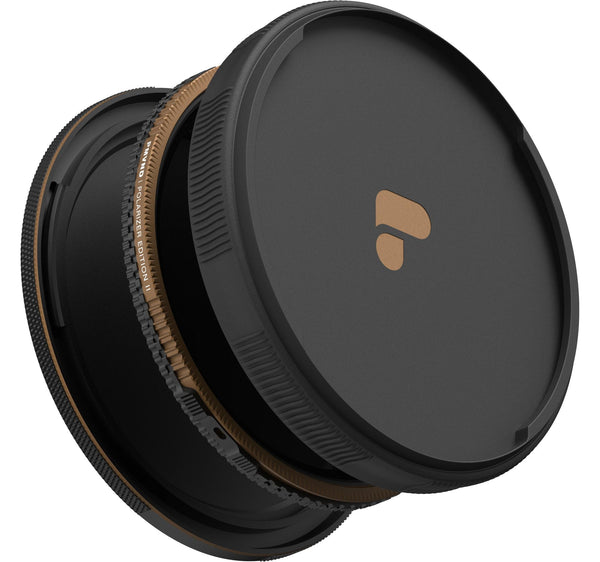
Due to the special structure of the filter frame, the HOYA Variable Density II can accept a lens cap that is one size larger than the filter itself. For example, the 77 mm HOYA Variable Density II can accept an 82 mm lens cap, as shown in the image below.
For longer exposure times
Without changing the aperture, the HOYA Variable Density II offers the freedom to change the shutter speed according to the desired effect. Effective for motion blur effects such as waterfalls, cars, or blurred panning movements to make the subject stand out from the background.
For larger apertures
Enables the use of larger apertures in excessive lighting to reduce the depth of field and literally draw attention to the subject.
Avoid overexposure
Even at a shutter speed of 1/8000 seconds, a large aperture of f/1.4 or f/1.2 can lead to overexposure. With the HOYA Variable Density II filter, overexposure can be avoided by adjusting the light input.
For video recording with a cinematic look
The variable density filter is a must-have for video bloggers and professional video content creators. It enables film/video cameras to set the correct exposure in bright lighting conditions to achieve a cinematic look.
ND filter – extend the exposure time
A neutral density filter (ND filter), also known as a gray filter, blocks a portion of the incoming light. With a gray filter, you significantly extend the exposure time, thereby achieving effects such as blurred water or preventing overexposure of the image in the midday sun with an open aperture.
Specifications
- Lieferumfang:
- 1x Hoya Variable Density II ND3-400, 1x Plastikbehälter
- Objektivfilter Anwendung:
- Graufilter
- Filterdurchmesser:
- 72 mm
Hoya Variable Density Filter II ND3-400 – 72 mm
- VendorHoya
122.70
with a diameter of 72 mm | Filter with adjustable density and an ND range of 1.5 to 9 stops (ND3-400) | Made of optical glass for optimal image quality | Ideal for creative photography or video recording | Provides a longer shutter speed and allows for better control over the depth of field | Slim design to prevent vignetting
Description
HOYA Variable Density II ND3-400 – 72 mm Gray Filter
Filter with adjustable density and an ND range of 1.5 to 9 f-stops (ND3-400)
Variable density filters are widely used because they can replace a set of fixed ND filters by offering a range of densities that can be adjusted according to the desired exposure settings. For stationary subjects, variable density filters reduce the shutter speed according to the photographer's intentions when the shutter speed cannot be shortened due to camera limitations. Variable density filters can also enhance the bokeh effect in overexposed environments, thus preventing overexposure of the image.
Optimal shutter speed for video recording
When recording video, it is important that the shutter speed corresponds to the set frame rate. This means that for optimal results, it should be equal to double the frame rate. Because unlike in still photography, a shutter speed that is too short can create a distracting effect and produce ghosting that does not look good in the finished video. By using variable density filters, the shutter speed can be set to the correct value to maintain the natural and smooth motion desired in video recordings.
Lens cap compatibility
Due to the special structure of the filter frame, the HOYA Variable Density II can accept a lens cap that is one size larger than the filter itself. For example, the 77 mm HOYA Variable Density II can accept an 82 mm lens cap, as shown in the image below.
For longer exposure times
Without changing the aperture, the HOYA Variable Density II offers the freedom to change the shutter speed according to the desired effect. Effective for motion blur effects such as waterfalls, cars, or blurred panning movements to make the subject stand out from the background.
For larger apertures
Enables the use of larger apertures in excessive lighting to reduce the depth of field and literally draw attention to the subject.
Avoid overexposure
Even at a shutter speed of 1/8000 seconds, a large aperture of f/1.4 or f/1.2 can lead to overexposure. With the HOYA Variable Density II filter, overexposure can be avoided by adjusting the light input.
For video recording with a cinematic look
The variable density filter is a must-have for video bloggers and professional video content creators. It enables film/video cameras to set the correct exposure in bright lighting conditions to achieve a cinematic look.
ND filter – extend the exposure time
A neutral density filter (ND filter), also known as a gray filter, blocks a portion of the incoming light. With a gray filter, you significantly extend the exposure time, thereby achieving effects such as blurred water or preventing overexposure of the image in the midday sun with an open aperture.